
Frequently Asked Questions
Answers to some of the most common questions about coaching, consultations, and getting started.
What makes E-Fit different from typical personal training?
E-Fit focuses on movement quality, strength development and long-term physical capability, rather than short-term workouts.
Every coaching programme begins with an assessment of how your body moves, allowing training to be structured around improving mobility, strength and performance in a progressive and sustainable way.
With more than 25 years of coaching experience, this approach supports both performance development and rehabilitation.
Who is this coaching designed for?
E-Fit coaching is suitable for individuals who want structured improvement in their physical capability.
Clients commonly include:
• professionals and executives managing demanding work schedules
• individuals rebuilding strength after injury or illness
• athletes returning to full performance
• disabled clients seeking adaptive coaching
• people wanting expert guidance to improve strength and mobility
Do I need to be fit before starting?
No.
Coaching programmes are designed around your current level of mobility, strength and physical capability.
Whether you are rebuilding your health, recovering from injury or aiming to improve performance, the programme is structured progressively to match your starting point.
Can you help with injuries or movement limitations?
Yes.
E-Fit coaching includes structured support for individuals recovering from:
• injuries
• surgery
• illness
• long periods of inactivity
• movement restrictions affecting daily life
The objective is not only recovery but restoring strength, mobility and long-term physical resilience.
Do you work with disabled clients?
Yes.
E-Fit has extensive experience supporting clients with physical disabilities, neurological conditions and mobility impairments.
Training programmes are adapted to support strength, coordination, independence and confidence in movement.
This experience also includes work within neurological and SEND school environments.
What happens during the initial consultation?
The consultation helps identify:
• your current movement capability
• any limitations or injuries
• your personal goals and priorities
From there, a structured coaching programme is designed around your needs.
How often should I train?
Training frequency depends on your goals, availability and starting point.
Some clients train once per week with additional independent sessions, while others follow a more structured schedule.
This is discussed during the consultation to ensure a realistic and sustainable approach.
Where does coaching take place?
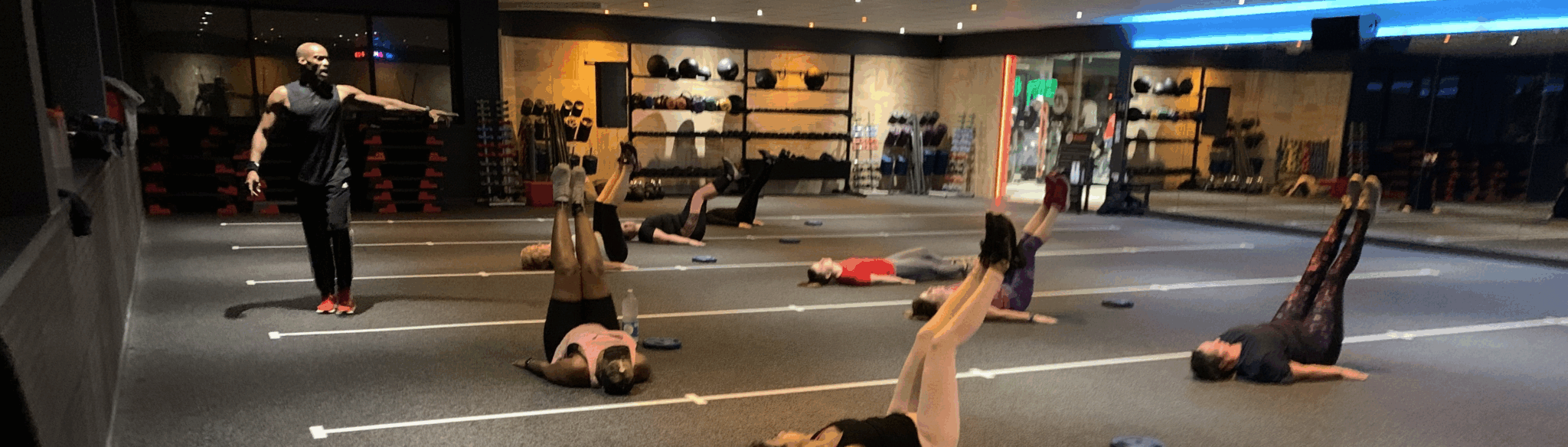
Coaching takes place at Woughton Leisure Centre, where both private sessions and structured classes are delivered.
What classes do you offer?
Alongside private coaching, a limited number of structured classes are available:
• Boot Camp – full-body conditioning session
• Train With The Trainer (TWT) – instructor-led performance challenge
• Legs, Bums & Tums (LBT) – lower-body and core strength session
These classes support strength development and conditioning.
Can this coaching work if I have a busy schedule?
Many of my clients are professionals, executives and business owners with demanding schedules.
Coaching programmes are designed to be time-efficient and structured, ensuring each session focuses on measurable progress rather than random workouts.
Even one well-structured session per week, combined with simple guidance for independent training, can produce significant improvements in strength, mobility and overall physical capability.
The goal is to make training sustainable alongside professional responsibilities.
What if I have long-standing mobility issues or injuries?
Many clients begin coaching because movement has become restricted through injury, sedentary work or previous training programmes that did not address underlying movement patterns.
Coaching begins with understanding how your body currently moves, identifying limitations in mobility, strength and coordination.
From there, training is structured progressively to rebuild movement quality and strength safely.
This approach allows clients to restore confidence in movement while improving long-term resilience.
I haven’t trained for years. Is it too late to start?
Not at all.
Many clients start coaching after long periods of inactivity, injury recovery or life circumstances that have reduced physical activity.
Programmes are designed around your current starting point, focusing on restoring mobility, developing strength and rebuilding physical confidence step by step.
Progress is measured by improvements in movement, strength and capability, not by unrealistic expectations.
How can coaching improve performance outside the gym?
For many professionals, physical performance directly affects energy levels, concentration and resilience under pressure.
Structured coaching improves:
• mobility and posture, reducing stiffness from long working hours
• strength and structural resilience, helping prevent injury
• overall physical capacity, improving stamina and recovery
Clients often report improvements not only in physical capability but also in focus, confidence and day-to-day energy.
The objective is not simply to train harder — but to develop a body that supports a demanding professional lifestyle.
Many clients initially begin coaching to address mobility or injury concerns, and later continue training to maintain long-term strength and performance.
My mobility is limited or I have a medical condition. Can I still train?
Yes.
Many clients begin coaching because they are experiencing mobility restrictions, long-term injuries or medical conditions that have reduced their physical confidence.
Training at E-Fit begins by understanding how your body currently moves, rather than applying a standard exercise programme.
Sessions focus on improving:
• joint mobility
• strength and stability
• coordination and movement control
• confidence in physical activity
Programmes are then progressed gradually to rebuild strength and physical capability.
E-Fit also has experience working with individuals with neurological conditions, physical disabilities and within SEND environments, allowing coaching to be adapted safely for a wide range of abilities.
The goal is always the same:
to help you move better, become stronger and regain confidence in what your body can do.